Viewing entries tagged
in Korean

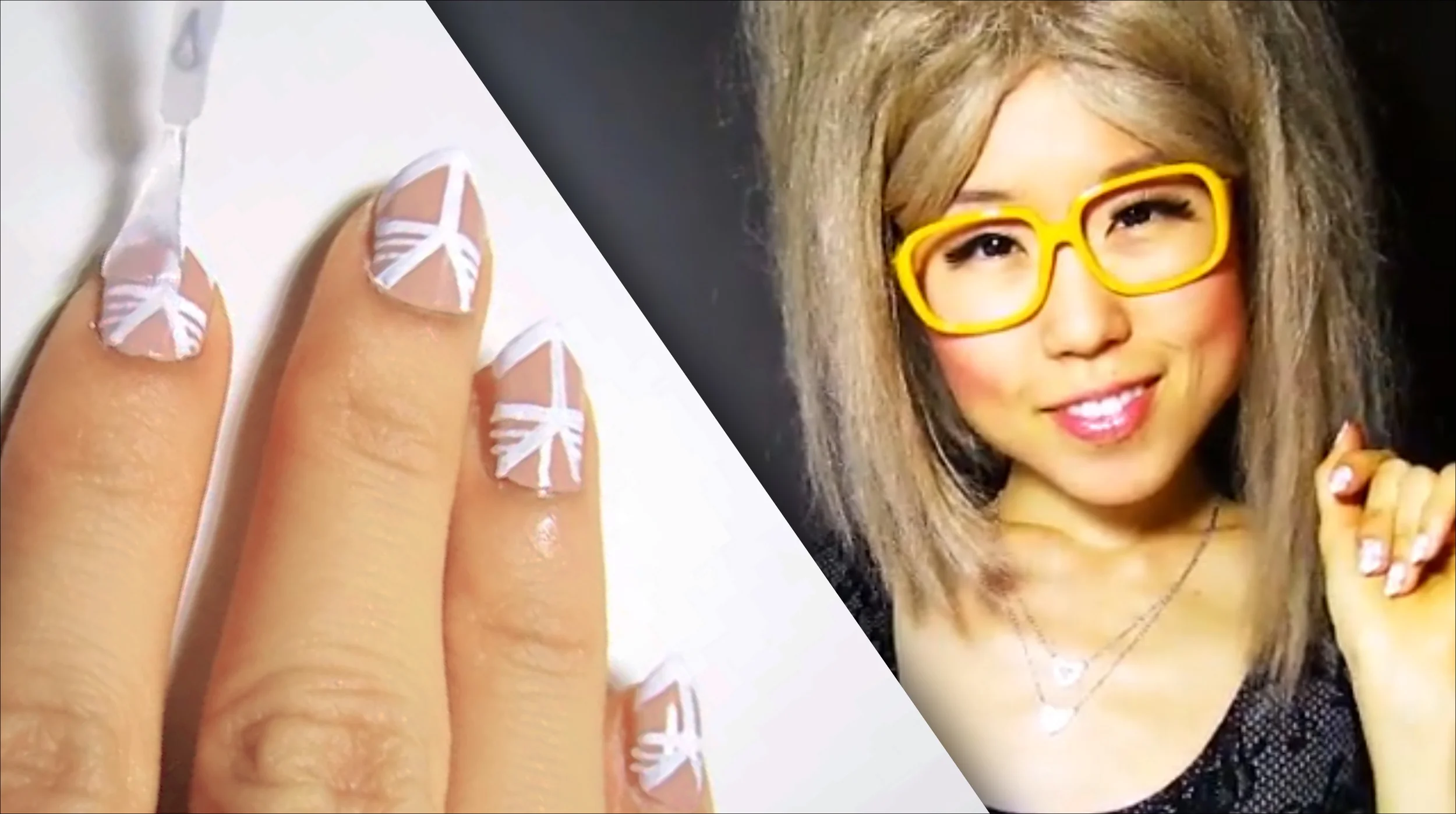
School Words in Korean (KWOW #59)

Comment

School Words in Korean (KWOW #59)

Are you teaching English in South Korea? Or planning to be a foreign exchange student? Whatever the case, we’re covering a highly requested topic: school. In the video we focused on school levels, places on campus, common subjects, and people in education, along with some useful phrases. Grade levels and school supplies are taught in this post.

"Like" us on Facebook! http://www.facebook.com/sweetandtastyTV "Follow" us on Twitter! https://twitter.com/sweetandtastytv ***READ THIS EPISODE'S BLOG: http://sweetandtastytv.com/2012/07/25/kwow-59-blog-school-words-in-korean/ WEBSITE: http://www.sweetandtastyTV.com

LIST OF GRADE LEVELS
Note: Korean name for each grade level is in parentheses.

Elementary school = 초등학교 / cho-deung-hak-gyo
1st grade = 일학년 / il-hak-nyeon
(elementary school 1st grade = 초등학교 일학년 / cho-deung-hak-gyo il-hak-nyeon)

2nd grade = 이학년 / ee-hak-nyeon
(elementary school 2nd grade = 초등학교 이학년 / cho-deung-hak-gyo ee-hak-nyeon)

3rd grade = 삼학년 / sam-hak-nyeon
(elementary school 3rd grade = 초등학교 삼학년 / cho-deung-hak-gyo sam-hak-nyeon)

4th grade = 사학년 / sa-hak-nyeon
(elementary school 4th grade = 초등학교 사학년 / cho-deung-hak-gyo sa-hak-nyeon)

5th grade = 오학년 / oh-hak-nyeon
(elementary school 5th grade = 초등학교 오학년 / cho-deung-hak-gyo oh-hak-nyeon)

6th grade = 육학년 / yook-hak-nyeon
(elementary school 6th grade = 초등학교 육학년 / cho-deung-hak-gyo yook-hak-nyeon)


Middle school = 중학교 / joong-hak-gyo
7th grade = 칠학년 / cheel-hak-nyeon
(middle school 1st grade = 중학교 일학년 / joong-hak-gyo il-hak-nyeon)

8th grade = 팔학년 / pal-hak-nyeon
(middle school 2nd grade = 중학교 이학년 / joong-hak-gyo ee-hak-nyeon)

9th grade = 구학년 / goo-hak-nyeon
(middle school 3rd grade = 중학교 삼학년 / joong-hak-gyo sam-hak-nyeon)


High school = 고등학교 / go-deung-hak-gyo)
10th grade = 십학년 / ship-hak-nyeon
(high school 1st grade = 고등학교 일학년 / go-deung-hak-gyo il-hak-nyeon)

11th grade = 십일학년 / ship-il-hak-nyeon (high school 2nd grade = 고등학교 이학년 / go-deung-hak-gyo ee-hak-nyeon)

12th grade = 십이학년 / ship-ee-hak-nyeon
(high school 3rd grade = 고등학교 삼학년 / go-deung-hak-gyo sam-hak-nyeon)


University = 대학교 / dae-hak-gyo
(University 1st grade = 대학교 일학년 / dae-hak-gyo il-hak-nyeon)
(University 2nd grade = 대학교 이학년 / dae-hak-gyo ee-hak-nyeon)
(University 3rd grade = 대학교 삼학년 / dae-hak-gyo sam-hak-nyeon)
(University 4th grade = 대학교 사학년 / dae-hak-gyo sa-hak-nyeon)


*** If you want to say 1st grade, you combine the Sino-Korean version of number “1” with “학년,” thus 일학년 (il-hak-nyeon). If you want to say 2nd grade, you would combine the Sino-Korean “2” and “학년” together, which becomes 이학년 (ee-hak-nyeon). To specify your school level, add the appropriate term before the Sino-Korean number. Here’s the formula:

School level + Sino-Korean number + grade
School level + Sino-Korean number + 학년
School level + Sino-Korean number + hak-nyeon

There are two number systems in Korea. To learn the Sino-Korean number system, watch KWOW episode 15 below. For the native Korean number system, watch lesson 5 from the “Let’s Learn Korean with Professor Oh” collection.

"Like" us on Facebook! http://www.facebook.com/sweetandtastyTV "Follow" us on Twitter! https://twitter.com/sweetandtastytv Sign up for our BLOGS: http://sweetandtastytv.com/ ****** LESSON 4 (Complex Vowels): http://youtu.be/Mv9GjTBQ2JA LESSON 3 (Double Consonants): http://youtu.be/D9pR-mem_o4 LESSON 2 (Write the Alphabet): http://youtu.be/tLLmotJ1Gec LESSON 1 (Pronounce the Alphabet): http://youtu.be/CdiR-6e1h0o

Did you lose your pencil?
Ask your classmate: 연필 빌릴 수 있을까?
Yunpeel beellil soo isseulgga?
Which is the informal way of asking, “Can I borrow a pencil?”
But what if you have a pencil and need a ruler or eraser instead? Fill in the blank of the following phrase with your needed object (see list below for common school supplies):

Can I borrow _____?
_____ 빌릴 수 있을까?
(_____ beellil soo isseulgga?)

Example A: Can I borrow the scissors?
가위빌릴 수 있을까?
(Gawee beellil soo isseulgga?)

Example B: Can I borrow a book?
빌릴 수 있을까?
(Chek beellil soo isseulgga?)


LIST OF COMMON SCHOOL SUPPLIES:
Book = 책 (chek)
Calculator = 계산기 (gye-san-ghee)
Crayons = 크레용 (keu-reh-yong)
Eraser = 지우개 (ji-oo-gae)
Notebook = 수첩 (soo-chup)
Paper = 종이 (jong-ee)
Pen = 펜 (pen)
Pencil = 연필 (yeon-pil)
Colored pencil = 색연필 (saek-yeon-pil)
Ruler = 자 (ja)
Scissors = 가위 (ga-wi)


KWOW CONTEST OF THE WEEK:

  1. Complete the phrases “__________빌릴 수 있을까?” by filling in the blank with the featured school supplies. (You will have 11 complete sentences.)
  2. Take a photo of your fantastic work.
  3. Upload the photo onto Twitter.
  4. Copy and paste the link in the comment section below. (Note: Other submissions may not be considered an entry.)
  5. Don’t forget to ask your fun/crazy/yummy question to this week’s KWOW host Billy Jin.
  6. Have fun! The first *seven* people to complete the task will win a reply from Billy Jin. Last chance as KWOW comes to a close!
  7. Stay tuned for next week’s extra special contest! Winner will receive a prize! :D

Comment

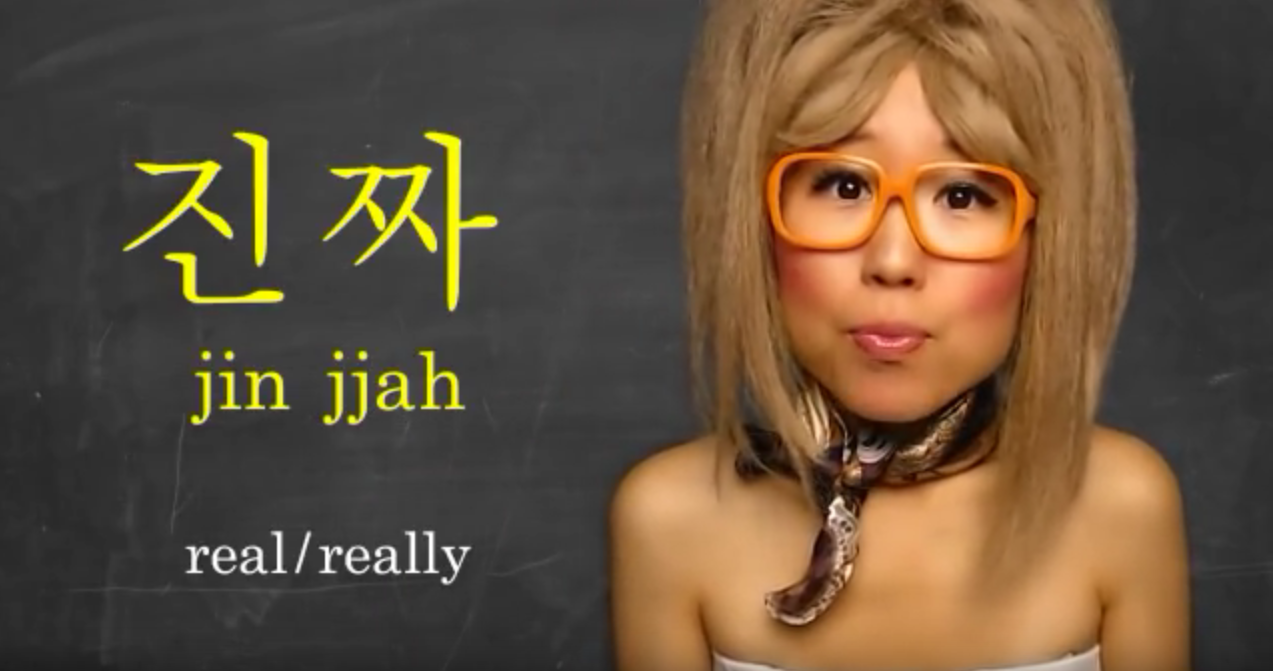
How to say "HAVE" and "DON'T HAVE" in Korean (KWOW #54)

2 Comments

How to say "HAVE" and "DON'T HAVE" in Korean (KWOW #54)

Let's say you're walking on a street in Seoul and you suddenly have the urge to use the restroom. Or maybe there's a Korean hottie and you want to know if they're single or taken. Perhaps you saw a cute shirt on display and want to ask if they have one in your size?

Whatever the case, episode 54 of KWOW is your best friend: we're learning about the words HAVE and DON'T HAVE.

READ THE EPISODE #54 BLOG: http://sweetandtastytv.com/2012/06/19/864/ "Like" us on FACEBOOK! http://www.facebook.com/sweetandtastyTV "Follow" us on TWITTER! https://twitter.com/sweetandtastytv

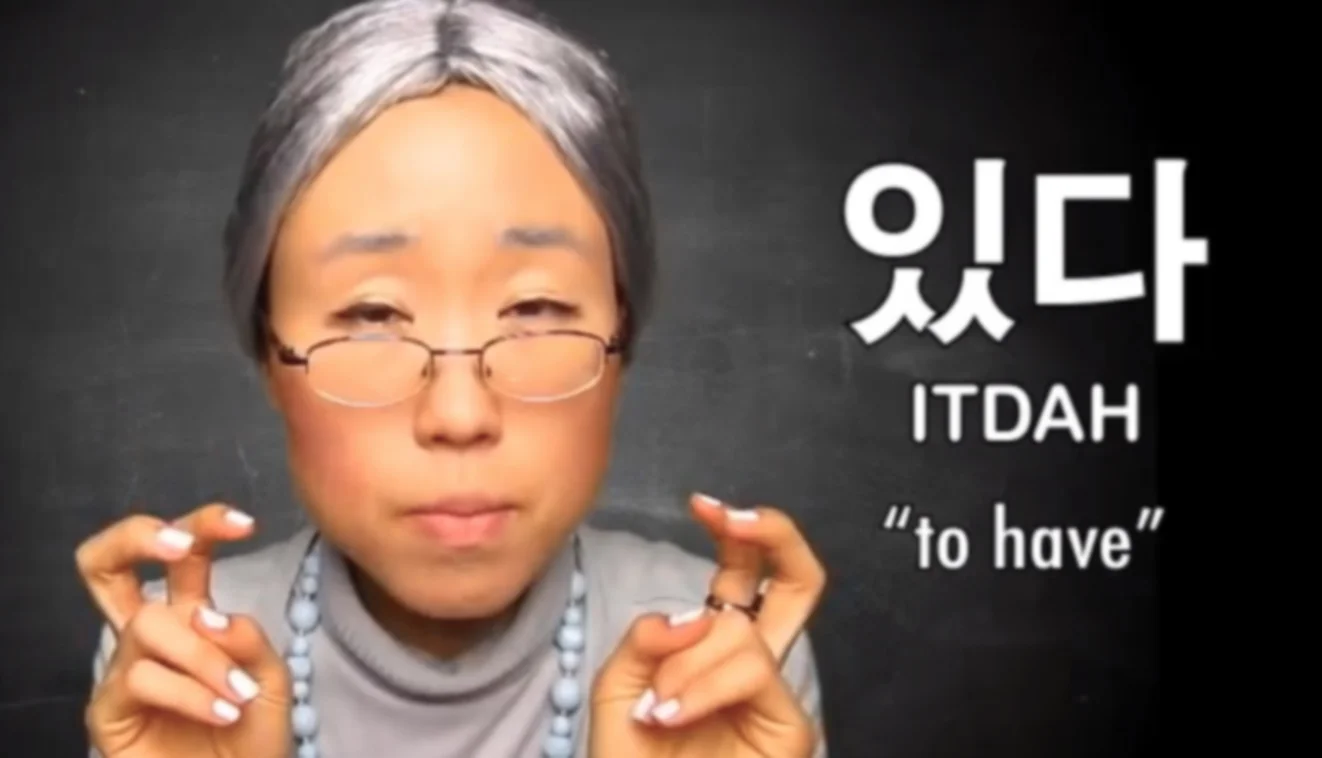
Here's the brief review: ISSUH (있어) is the informal way of saying "have" and "is." Issuh is a conjugation of the verb ITDAH (있다), which means "to have" and "to be."

UPSSUH (없어) is the formal way of saying "don't have" and "is not." Upssuh is a conjugation of the verb UPDAH (없다), which means "to not have" and "to not be."

Let's say you're at a bank and want to ask if they have a bathroom.
You say… 화장실 있어요? (Hwajangshil issuhyo?)
Do you have a restroom?

In the previous phrase, issuhyo (있어요) means "have." Remember that issuhyo can also mean "is," depending on the context. Here's an example where the word is used as "is":

화장실이 어디 있어요?
(Hwajangshilee uhdee issuhyo?)
Where is the restroom?

If the person replies, "화장실 없어요" (Hwajangshil upssuhyo), it means "We don't have a restroom." Sorry! Try asking at the cafe across the street. Maybe if you buy some coffee, they'll let you use their restroom.

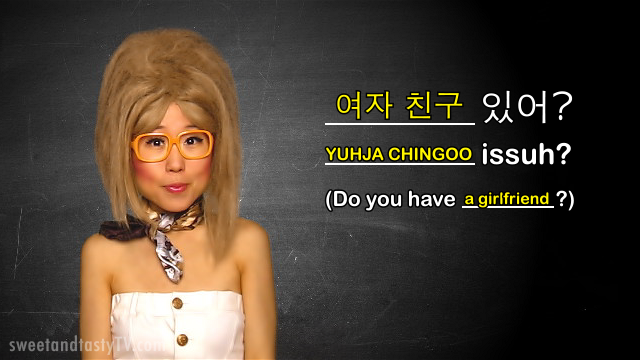
Billy Jin informally asks, "Do you have a girlfriend?" Boys, don't get too excited. This girl is taken!

Billy Jin informally asks, "Do you have a girlfriend?" Boys, don't get too excited. This girl is taken!

You are at your friend's birthday party and see a cute boy (or girl). You want to know if they have a girlfriend (or boyfriend). Here's how you would ask:

남자 친구 있어요? (Namja chingoo issuhyo?) Do you have a boyfriend?

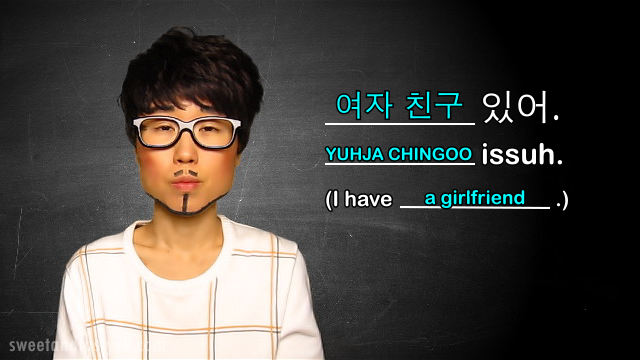
여자 친구 있어요? (Yuhja chingoo issuhyo?) Do you have a girlfriend?

Taekwon Do informally says, "I have a girlfriend." If you didn't know yet, his girlfriend is Billy Jin.

Taekwon Do informally says, "I have a girlfriend." If you didn't know yet, his girlfriend is Billy Jin.

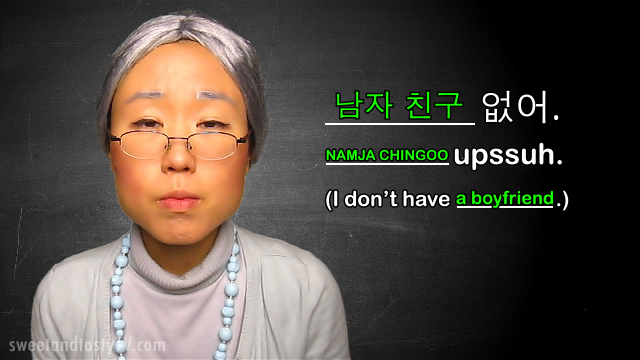
Granny Kim informally says, "I don't have a boyfriend." That's because she has a husband!

Granny Kim informally says, "I don't have a boyfriend." That's because she has a husband!

If they reply, "여자 친구 있어요" (Yuhja chingoo issuhyo), it means "I have a girlfriend." It's okay. There are plenty of other cuties at the party!

But maybe they instead say, "여자 친구 없어요" (Yuhja chingoo upssuhyo), which means, "I don't have a girlfriend." Ask him on a date to the karaoke and show off the latest dance moves you learned from Girls' Generation. And hopefully he's got some Big Bang dance moves ready for you! Sounds like the beginnings of a potential romance.

NOTE: To speak formally, remember to add YO (요) at the end of the phrases.


Think you can hear ISSUH and UPSSUH within their context? Quiz yourself with these practice questions, then enter our weekly contest. Answers are located at the bottom. No peeking!

Question #1: Where does the first UPSSUH (없어) appear in Beast's "Breath"?

Official M/V of Beast brand-new single '숨' *'숨' : [su:m], means 'breath' Enjoy! Everybody!

Question #2: Can you find the first ISSUH (있어) in Dalmatian's "E.R."? (You'll also hear UPSSUH in this song.)

전 멤버가 작사,작곡,프로듀싱 능력까지 갖춘 '달마시안' 틀에 찍어내듯 똑같은 비트, 지루한 멜로디는 용납되지 않는다. 오직 '달마시안의 음악' 이라고 불리울 뿐. 2011년 2월 14일 발매한 첫번째 미니앨범 이후 약 1년 3개월 만에 두번째 미니앨범을 들고 대중 앞에 선 '달마시안'.

Question #3: Think you can find UPSSUHYO (없어요) in Apink's "I Don't Know"? Where?

APINK (에이핑크) - I Don't Know MV (몰라요) A Pink's first music video for their first mini-album, Seven Springs of A Pink. International Forums: http://a-pink.net Twitter: http://twitter.com/#!/apinkforums Purchase Seven Springs of APINK: http://bit.ly/7SpringsofApink

GRAND FINALE QUESTION #4: How many UPSSUH's (없어) can you find in Huh Gak's "I Told You I Wanna Die"?

★ 솔로 가수로 우뚝 서다. 첫 번째와도 같은 Mini Album "First Story"로 '오디션 가수가 과연 성공 할 수 있을까'란 우려와는 달리 당당하게 솔로 가수로의 입지를 굳힌 허각이다. 많은 분들의 응원과 사랑이 있었기에 지금의 자리에 올라 올 수 있었다. "아직도 얼떨떨하다는 느낌만 있어요. 열심히 준비하고 연습한 모습을 보여드려야겠다고만 생각 했지 꼭 1등이어야 한다는 강박관념은 없었으니까요.

ANSWERS BELOW

Answer #1: The first UPSSUH is sung at 2:18.

Answer #2: ISSUH is sung at 0:33.

Answer #3: UPSSUHYO appears at 0:51.

Answer #4: Did you find them all? Post your answer below, along with a fun/crazy/yummy question to Granny Kim. The first *FIVE* people to get the correct answer wins a reply from this week’s KWOW host Granny Kim. No question, no reply. Have fun! :)


ANSWER TO QUESTION #4 REVEALED! (June 26, 2012) UPSSUH is sung four times at 1:02, 1:08, 2:10, and 2:17.


2 Comments

How to say "Like" and "Don't Like" in Korean (KWOW #52)

Comment

How to say "Like" and "Don't Like" in Korean (KWOW #52)

How do you express your likes and dislikes in Korean? This week's host Taekwon Do shows you how:

READ THE EPISODE #52 BLOG: http://tinyurl.com/8abkce3 "Like" us on FACEBOOK! http://www.facebook.com/sweetandtastyTV "Follow" us on TWITTER! https://twitter.com/sweetandtastytv

Here's the brief review.
JOA is "like." AHNJOA is "not like."
AHN literally means "not."
SHIRUH also means "not like" and "hate."

You can use JOA all by itself as a question or answer.

If someone asks you:
좋아?
Joa?
(Do you like this/it?)

Then you can answer back with the same word:
좋아.
Joa.
(I like this/it.)

If you want to say you like something or someone, fill in the blank:
______ 좋아.
______ joa.
(I like _____.)

For example:
효리
좋아.
Hyori joa.
(I like Hyori.)

Note 1: When speaking to adults, always remember to make your phrases FORMAL by adding YO (요) at the end.

Note 2: The H consonant is silent in JOA (좋아). So instead of JOHA, it's JOA.


Think you can spot JOA and SHIRUH in their context? Take this week's KWOW quiz! Answers are located at the bottom. No peeking!

Question #1: Where is the first JOA sung in Girls' Generation TTS "Twinkle"?

☞ Download on iTunes : http://itunes.apple.com/us/album/twinkle/id523113063 * Album booklet and audio file of the members introducing the tracks will be provided ONLY to those who buy the album on iTunes.

Question #2: How many JOAs appear in IU's "You and I"?

♬ Download ] iTunes : http://itunes.apple.com/us/album/last-fantasy/id484346200 Melon : http://www.melon.com/cds/album/web/albumdetailmain_list.htm?albumId=2040666 ▶ LOENMUSIC TW : https://twitter.com/LOEN_MUSIC ▶ LOENMUSIC FB : http://www.facebook.com/LOENMUSIC.official IU's new album 'Last Fantasy' is the first full album in 2 years since her first album 'Growing Up', produced by Cho Young-Chul who gave birth to the "IU syndrome" last year.

GRAND FINALE CONTEST QUESTION #3: How many SHIRUHs and SHILTAs can you find in 4Minute’s “Volume Up”? (“Shilta” is the raw, unconjugated verb of “shiruh”)

포미닛 미니 3집 타이틀 곡 'Volume Up' 뮤직비디오 대 공개! 1년만에 돌아온 포미닛의 야심작, 'Volume Up'의 음원 및 뮤직비디오가 4월 9일 0시 공개되었습니다. 더 파격적으로, 더 멋지게 돌아온 포미닛의 모습! 지금 바로 감상하세요! ---------------------------------------------------------------------------------------------------- Pump up the volume for "SAX-y" new sound!! 4MINUTE's new mini album and official music video for 'Volume Up' have been unveiled!

ANSWERS BELOW. NO PEEKING!

Answer #1: The first JOA is sung at 1:11. 딴 사람들도 다 빛나는 나를 좋아해 Ddan saramdeuldo da beetnaneun nareul JOA hae (Other people like the twinkle in me)

Answer #2: JOA appears five times at 1:58, 2:01, 3:12, 3:15 and 8:37.

Answer #3: Think you found them all? Write your answer in the comment section with a question to Taekwon Do. The first *TEN* people to get the correct answer wins a reply from this week's KWOW host Taekwon Do. No questions, no reply. Have fun! :)


ANSWER #3 REVEALED! (Updated June 13)
SHILTA is sung twice at 0:47 and 1:04.
SHIRUH is sung three times at 1:28, 2:42, and 3:41.


Comment