As we already learned in KWOW episode 37 (see below), pansori (판소리) is a genre of Korea's traditional music performed by one singer and one drummer. Think of pansori as "Korean opera."
The most famous pansori story is “Chunhyangga (춘향가).” Set in the city of Namwon, Chunhyangga is the legendary love story of Chunhyang and Mongryong (몽령). To make a long story short, Chunhyang was a gisaeng (기생), a female entertainer for the aristocrats and royals. Mongryong was a district magistrate. Despite their class difference, they fell in love and married illegally. While Mongryong was in Seoul, another man forced Chunhyang to be his concubine. She refused and was given the death sentence. Mongryong returned to Namwon just in time to save her.
Here’s some Chunhyangga for you to enjoy:
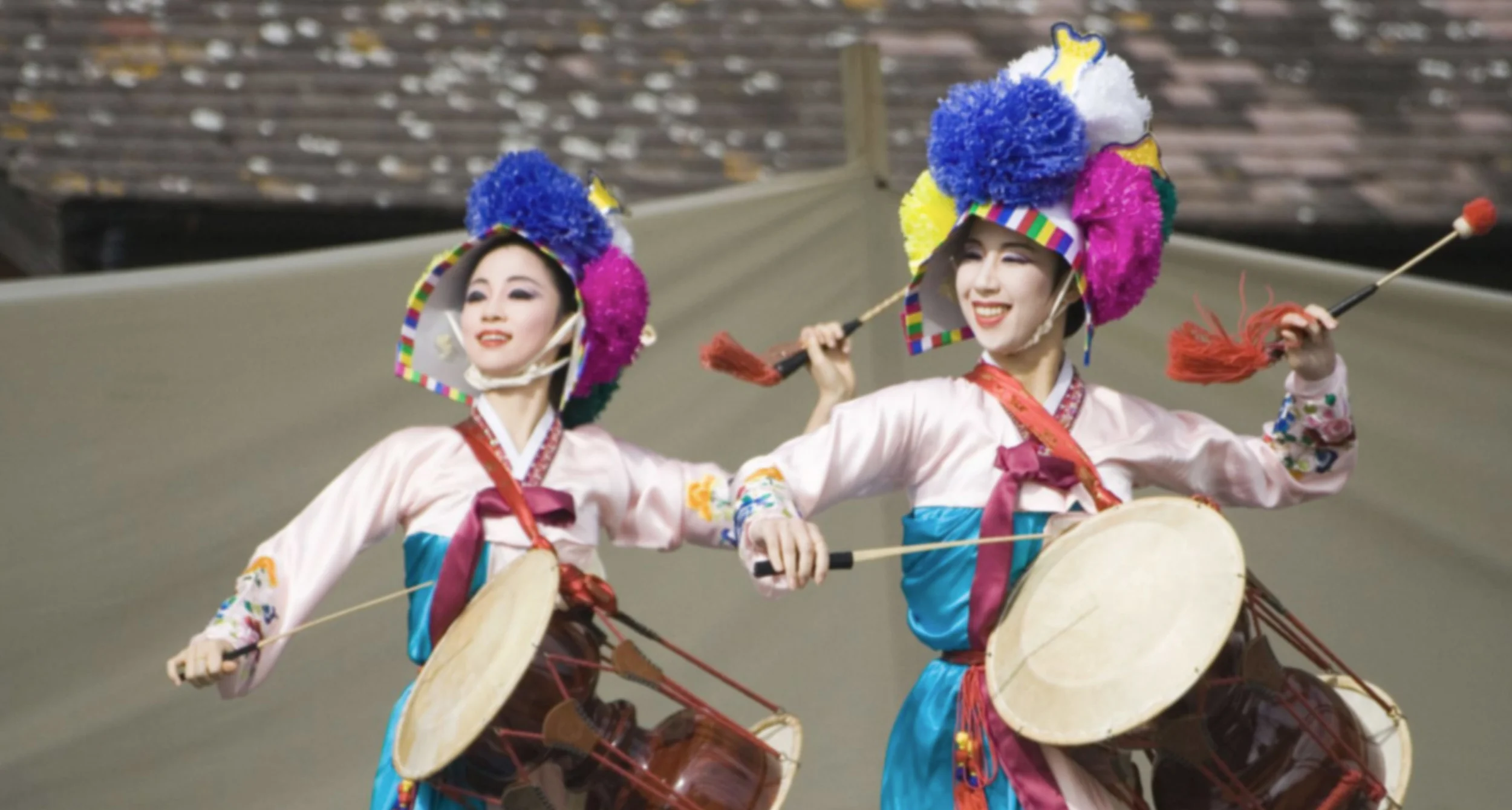
Another traditional Korean music genre is pungmul (풍물). Pungmul was once practiced by farmers for rural holidays and for shamanistic purposes. Nowadays pungmul are used as art and for political protest. Pungmul is commonly held outdoors and contains many performers, each dedicated to sing, dance, play drums, and more. The performers wear colorful costumes accompanied by hats with twirling ribbons.
Watch this pungmul performance:
Samul nori (사물놀이) is similar to pungmul as it uses the same traditional instruments: ggwaenggwari (꽹과리), janggu (장구), jing (징), and buk (북). The four instruments symbolize a weather condition. Janggu stands for rain. Ggwaenggwari symbolizes thunder. Buk represents clouds. Jing symbolizes the sounds of the wind. Compared to pungmul, samul nori songs tend to be faster and are performed while sitting down. Farmers would perform samul nori in hopes of good harvest.
Check out the performance by Kim Duk Soo, the most famous samul nori player:
Other Korean traditional music genres include sanjo (산조), shinawee (시나위), and jungak (정악).
Hope you enjoyed the music! :)